Boeing's engineers ratified their SPEEA contracts on October 1, 2026, and BA gave back most of a 1.19% jump
SPEEA's engineers approved by 67.62% and its technical staff by 268 ballots, six weeks after rejecting Boeing's first offer. BA rose 1.19% in a minute, then faded.
- SPEEA's Professional unit approved Boeing's contract 7,895 to 3,780 (67.62%); the Technical unit approved 2,061 to 1,793 (53.48%).
- Both units had rejected Boeing's first offers on August 21, 2026, and authorized a strike from October 6.
- BA rose 1.19% in the minute after the 3:17:31 p.m. ET headline and was up 0.30% twelve minutes later.

Reaction by asset (real prices)
| Asset | 2m before | At release | +1m | +10m | +1m % | +10m % |
|---|---|---|---|---|---|---|
| BA | 188.88 | 188.88 | 191.13 | 190.00 | +1.19% | +0.59% |
Boeing (NYSE: BA) rose 1.19% in the minute after the result of its engineers' contract vote crossed at 3:17:31 p.m. ET on Thursday, October 1, 2026, going from 188.88 to 191.13. Members of SPEEA, the union for about 17,000 Boeing engineers and technical workers, had ratified four-year contracts, which removed the possibility of a strike once the existing agreements expired on October 6. Most of the gain went within minutes: BA traded at 190.00 ten minutes after the headline and at 189.44 after twelve, up 0.59% and 0.30% from the level before it.
How the SPEEA vote turned between August and October
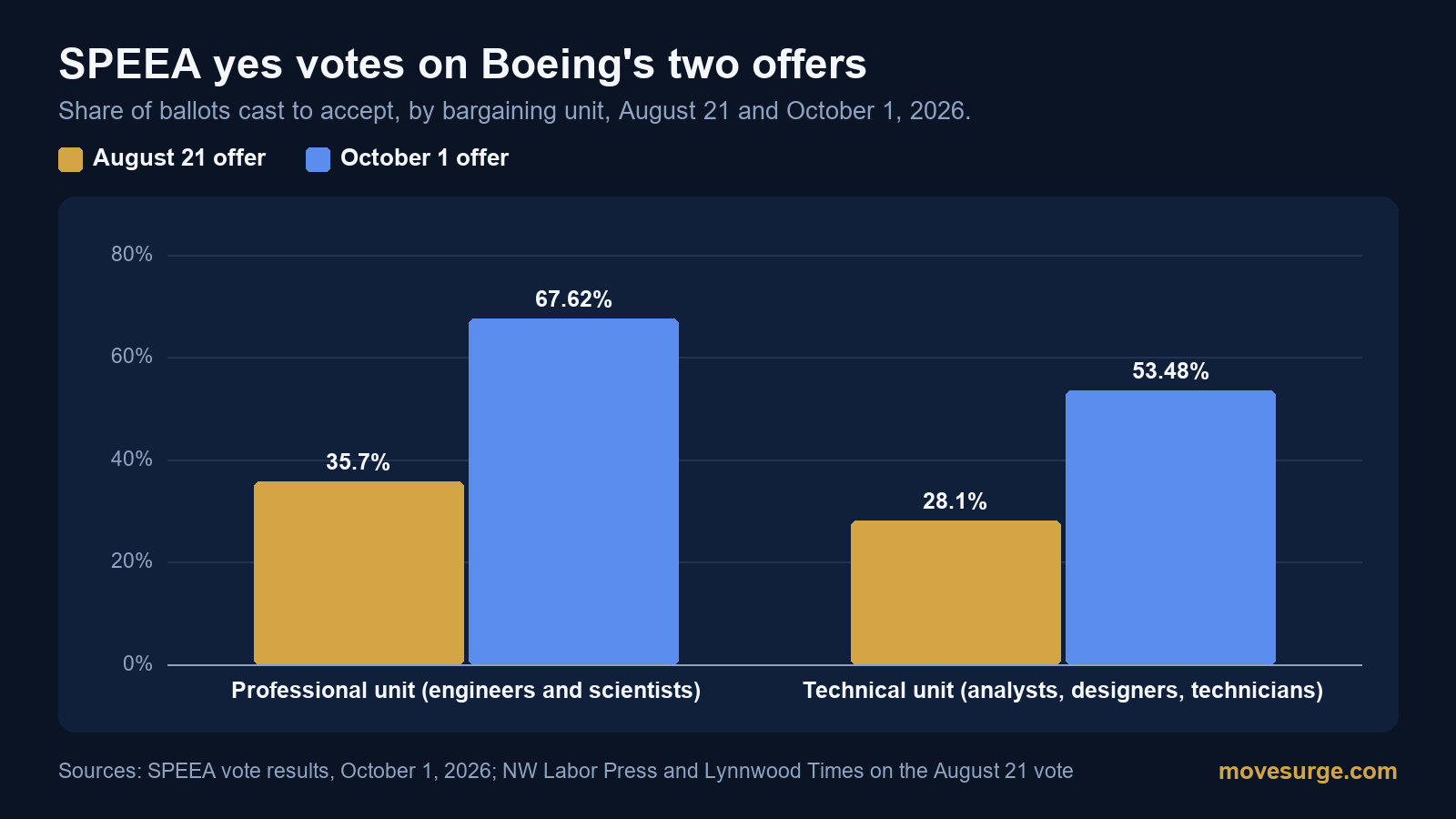
The Professional unit, roughly 13,000 engineers and scientists, approved its contract 7,895 to 3,780, or 67.62%. The Technical unit, about 4,000 analysts, designers and technicians, approved its contract 2,061 to 1,793, or 53.48%, a margin of 268 ballots. On August 21 the same two units had turned down Boeing's first offers, the engineers by 64.3% and the technical staff by 71.9%, and voted in the same ballot to authorize a strike.
| Unit | August 21: yes to no | August 21: yes share | October 1: yes to no | October 1: yes share |
|---|---|---|---|---|
| Professional (engineers and scientists) | 4,027 to 7,238 | 35.7% | 7,895 to 3,780 | 67.62% |
| Technical (analysts, designers, technicians) | 1,094 to 2,795 | 28.1% | 2,061 to 1,793 | 53.48% |
The engineers' yes share rose by about 32 percentage points and the technical unit's by about 25. The technical unit had rejected the first offer by the wider margin and came closest to rejecting the second, so the strike threat ended on a few hundred votes in the smaller of the two bargaining units.
What changed in the second Boeing offer
SPEEA says every worker it represents at Boeing sites in Washington, Oregon, California and Utah receives a 10% raise effective October 2, plus an extra day of paid leave to use before the end of the year. KIRO 7 reported SPEEA's projection that average engineer pay rises from $152,000 to $208,000 over the four-year term, against $197,000 under the offer rejected in August, and that the cap on mandatory overtime falls from 144 hours a quarter to 96 hours for engineers and 112 hours for technicians.
Leeham News wrote after the vote that a strike would have further delayed Boeing's aircraft certification programs, where engineers and technical staff do much of the work, and would likely have hurt 737 Max production.
Why the BA reaction to the SPEEA vote was small
Approval had been signposted since mid-September, when Boeing and SPEEA reached a second tentative agreement and the union's councils then endorsed it, so the October 1 vote resolved a strike risk that was already much smaller than it had been in August.
- August 21, 2026: both units reject Boeing's first offers and vote to authorize a strike.
- September 12, 2026: Boeing and SPEEA reach a second tentative agreement with a 10% raise up front.
- September 22, 2026: the union's bargaining unit councils recommend approval of both contracts.
- October 1, 2026: both units ratify, the Technical unit by 268 ballots.
- October 6, 2026: the date the old contracts expired, after which a strike would have been possible.
BA was already rising in the one-minute bar before the headline timestamp, which suggests the result was circulating a little before it crossed, and it added to the gain over the next two minutes before giving most of it back. The August rejection crossed at 4:27 p.m. ET, after the close, so there is no intraday reading to set beside this one.
Did Boeing engineers approve the SPEEA contract in October 2026?
Yes. On October 1, 2026, SPEEA's Professional unit approved its four-year contract 7,895 to 3,780, or 67.62%, and the Technical unit approved its contract 2,061 to 1,793, or 53.48%. The vote removed the possibility of a strike after the old contracts expired on October 6.
How did Boeing stock react to the SPEEA contract vote?
BA rose 1.19% in the minute after the result crossed at 3:17:31 p.m. ET, from 188.88 to 191.13. Twelve minutes later it was at 189.44, up 0.30%.
What raise do SPEEA members get under the new Boeing contract?
SPEEA says represented workers get a 10% raise effective October 2, 2026, plus an extra day of paid leave before the end of the year. KIRO 7 reported SPEEA's projection that average engineer pay rises from $152,000 to $208,000 over the four years.
How did SPEEA vote on Boeing's August 2026 offer?
On August 21, 2026, the Professional unit rejected the offer 7,238 to 4,027 and the Technical unit rejected it 2,795 to 1,094. Both units also voted to authorize a strike.
Sources
-
Profs and Techs vote to approve contract offers
— SPEEA IFPTE Local 2001
Professional unit approved 67.62% (7,895 to 3,780), Technical unit 53.48% (2,061 to 1,793); 10% raises effective October 2 and an extra day of paid leave
-
Boeing Avoids Strike as SPEEA Engineers and Technicians Approve New Contracts
— Leeham News
Ratification ended the strike threat; a strike after October 6 would have delayed certification programs and likely hurt 737 Max production
-
SPEEA members approve Boeing contracts with 10% raises after rejecting earlier offer
— KIRO 7
Projected engineer pay from $152,000 to $208,000 versus $197,000 under the August offer; mandatory overtime cap cut from 144 to 96 hours (engineers) and 112 hours (technicians) per quarter
-
Boeing engineers and technical professionals vote down contract, greenlights strike
— Lynnwood Times
Both units rejected Boeing's first offers on August 21, 2026 and authorized a strike
-
Engineers, technicians reject Boeing's best and final offer; authorize strike; talks to resume
— Leeham News
August vote counts: Professional unit 7,238 to 4,027 against, Technical unit 2,795 to 1,094 against; contracts expire October 6
-
Boeing and engineers union reach tentative contract agreement
— GV Wire
Boeing and SPEEA reached a second tentative agreement on September 12, 2026
-
SPEEA's BUCs recommend approval for two Boeing contracts
— Leeham News
SPEEA's bargaining unit councils recommended approval of both contracts on September 22, 2026
Never miss the next market-moving story
Follow the core market-moving feed across equities, macro, currencies and commodities. Your subscription includes recorded price reactions, search, watchlists, alerts and research tools.
Create free accountGo real time Watch live headlines -- free